
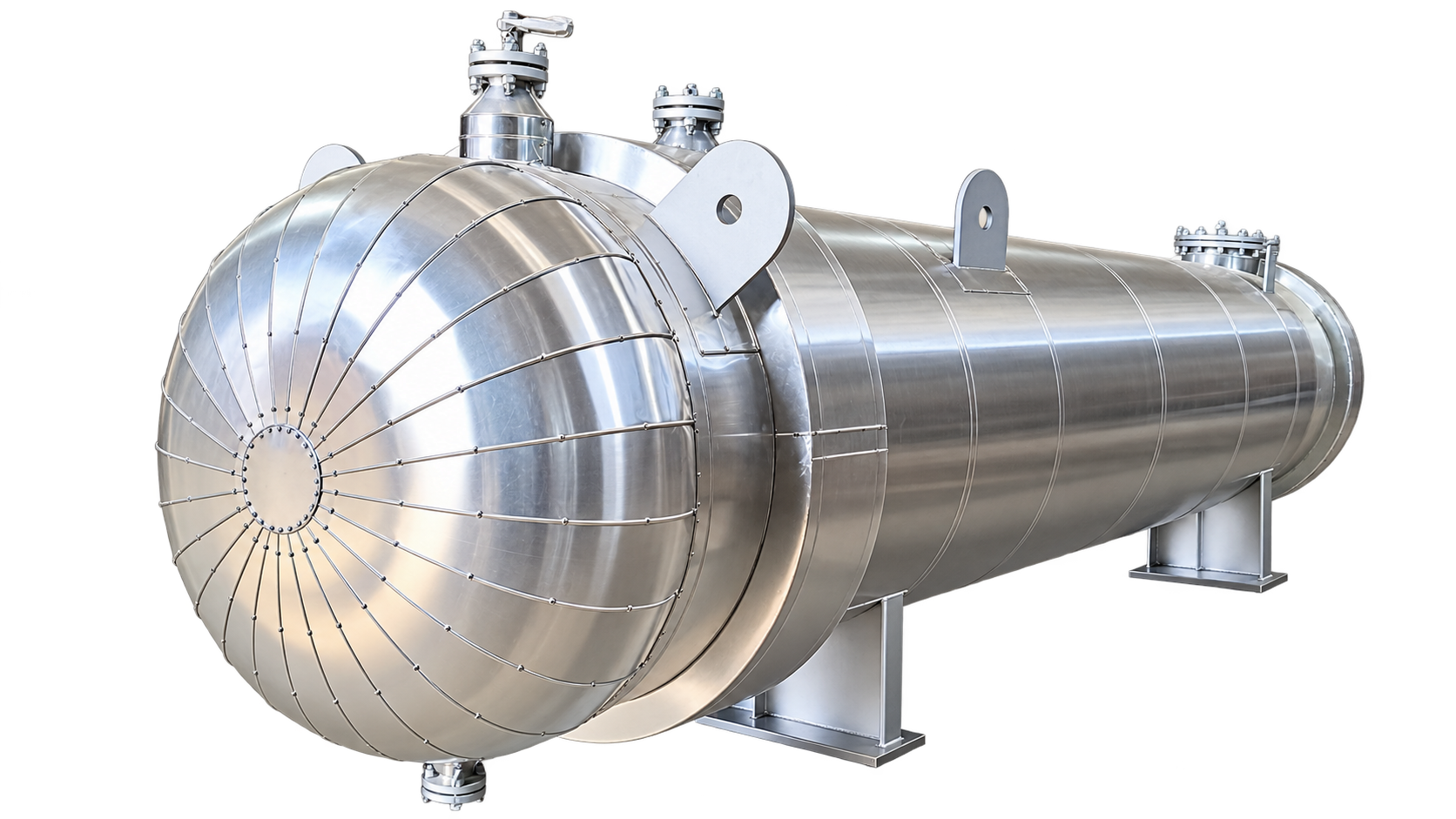
 Representative shell and tube equipment image; final construction follows the approved datasheet.
How Shell & Tube Heat Exchanger works
A shell and tube heat exchanger transfers heat between two separate fluids across a tube wall. Thermal sizing starts with the specified inlet and outlet temperatures, flow rates, physical properties, fouling allowances and allowable pressure drops. Mechanical arrangement then follows the pressure and temperature envelope, materials, access for inspection and the expected difference in thermal expansion between shell and tubes. MechOilfield offers fixed tubesheet, floating head and U-tube configurations for review against the process datasheet.
Choose the bundle arrangement for the duty
The best construction depends on thermal expansion, which side needs mechanical cleaning, bundle removal needs and available space. The following options describe typical arrangements; selection is confirmed by thermal and mechanical calculations.
Fixed tubesheet
Tube ends are secured to tubesheets fixed to the shell. A compact option where the shell-to-tube temperature difference and fouling service permit it. Tube interiors can be cleaned mechanically; shell-side mechanical cleaning is limited because the bundle is generally not removable. An expansion joint may be assessed when differential expansion requires it.
Floating head
One tubesheet end accommodates differential movement and the tube bundle can be removed from the shell. This is useful when shell-side access, mechanical cleaning or high differential expansion is important. The closure and sealing arrangement are selected with maintenance access and process pressure in mind.
U-tube
Tubes bend back into a U and are attached to a single tubesheet, allowing thermal expansion of the tube bundle and permitting its removal. Shell-side cleaning is accessible after removal; mechanical cleaning inside the U bends is more difficult, so tube-side fouling needs careful review.
Information needed for a technical offer
Send the hot- and cold-side fluid composition, mass flow, inlet/outlet temperatures and pressures, allowable pressure drop, fouling factors and design cases. Specify design pressure and temperature for each side, corrosion allowance, materials, required code, site conditions, lifting limits and inspection requirements. A datasheet lets us compare fixed, floating and U-tube options before committing to a design.
Developed for the operating duty
Typical applications
- Oil and gas process heating or cooling
- Production fluid heat recovery
- Package mounted thermal equipment
Inputs for engineering
- Hot and cold side flow, composition and inlet/outlet conditions
- Allowable pressure drop, fouling resistance and design margins
- Materials, corrosion allowance and maintenance requirements
What the package can include
- TEMA type and flow arrangement selected for duty
- Thermal calculation and mechanical design to specified code
- Tube bundle, shell, channels, supports and inspection documents
Final sizes, material grades, pressure classes, makes, testing and documentation are specified in the approved technical offer. We coordinate applicable design, fabrication, inspection and quality records against the project requirements.
Which shell and tube construction is right for my project?
The choice follows thermal expansion, fouling and cleaning requirements, pressure and temperature, and maintenance access. Share the thermal and mechanical datasheet so we can evaluate a fixed tubesheet, floating head or U-tube arrangement.
Shell and tube heat exchangers for oil and gas
Shell and tube heat exchangers can provide process heating, cooling or heat recovery where the specified fluids, pressures and temperatures suit the selected construction. Applications may include production-fluid heating, process cooling and heat recovery within equipment packages. Duty, approach temperature, fouling and allowable pressure drop are reviewed together; an exchanger cannot be selected reliably from connection size or overall dimensions alone.
Custom shell and tube heat exchanger engineering
MechOilfield evaluates fixed tubesheet, floating head and U-tube arrangements against the thermal datasheet and maintenance requirements. The project review identifies fluid allocation, materials, corrosion allowance, mechanical cleaning access and expansion behaviour. Specify the required design code and edition, TEMA requirements where applicable, inspection plan and documentation in your enquiry. Thermal and mechanical calculations establish the agreed construction and final supply scope.
Need design services only?
Explore our design and engineering services for calculations, modelling and fabrication drawings, or contact our team with your equipment scope.