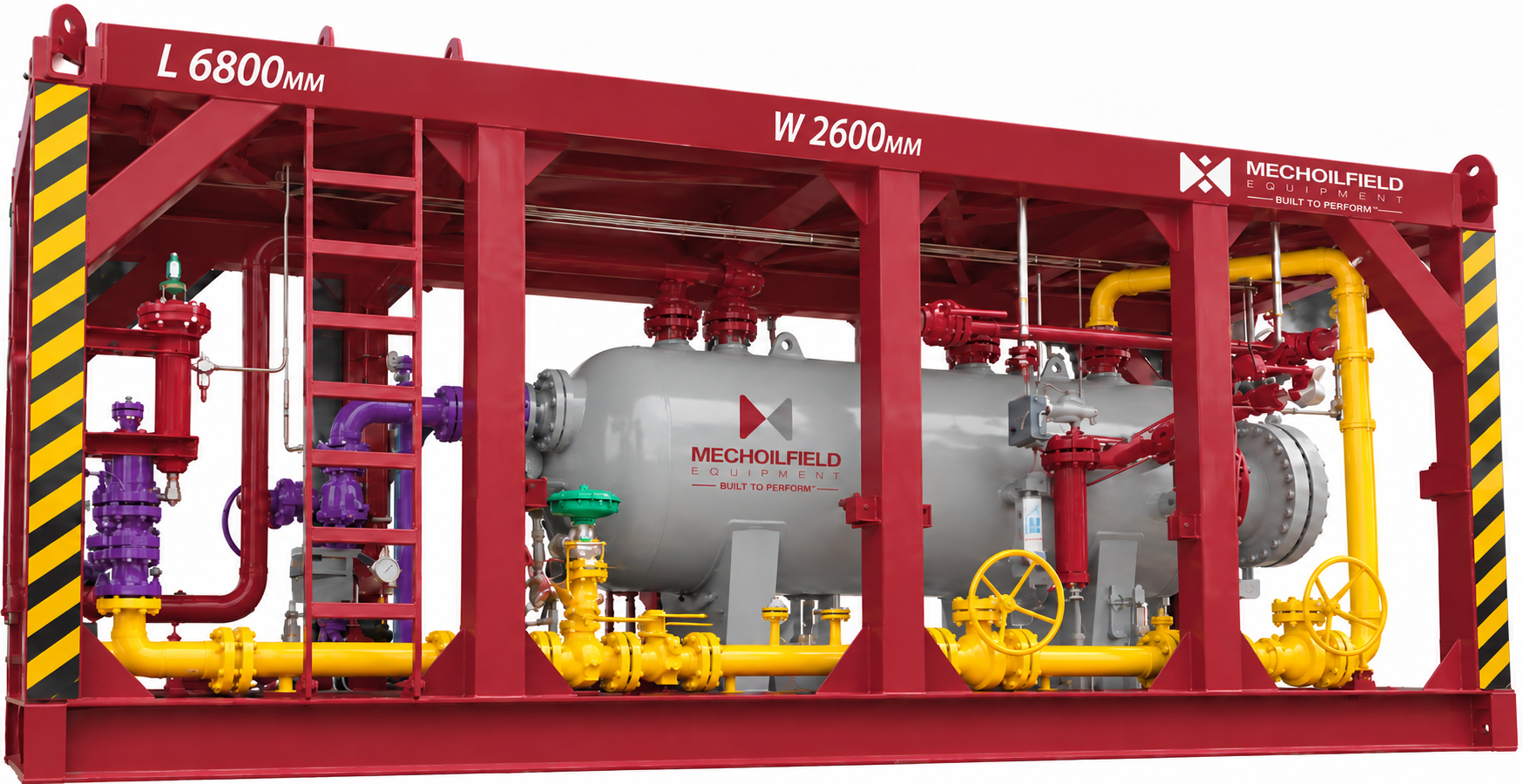
 Representative separator photo; the complete package layout and equipment selection are project specific.
How 10K Well Testing Package works
A 10K surface well testing package is specified when the upstream inlet equipment must meet a 10,000 psi pressure class under the well test design basis. The high-pressure tree or flowhead interface, safety valve, data header and choke manifold require a consistent pressure boundary and compatible connections. A larger anticipated differential across the choke calls for careful review of erosion, solids, temperature change, trim and downstream maximum credible pressure. Conditioning, test separation, metering, liquid handling and controls are then selected for their own design cases. The P&ID and operating philosophy define the transition from the 10K inlet section to lower-pressure equipment and identify the protection at each boundary.
What a 10K surface well testing spread can include
A package can be supplied as individual skids or an integrated spread. The precise battery limits, equipment count and approved vendors are determined with the client; an item shown below is an available configuration, not an automatic inclusion.
Wellstream control
Surface test tree or flowhead interface, 10K class surface safety valve, data header, choke manifold and ESD logic where specified. Sand filtration or desanding can be incorporated for solids-bearing flowback.
Process and measurement
Indirect heating when needed, a two- or three-phase test separator, level and pressure control and oil, gas and water measurement selected for the expected range and fluid properties.
Transfer and utilities
Surge or gauge tank, liquid transfer pumps, diverter manifolds, burner or flare interface, data acquisition, instrument air and power connection are scoped to the test plan and site facilities.
Pressure class, ratings and project documents
For a 10K inlet section, check the maximum shut-in and flowing pressures, connection class, solids loading and the expected pressure drop across each choke operating case. The higher pressure difference can affect choke trim, downstream temperature and erosion exposure, so the process and mechanical review must be based on the actual wellstream. Verify the pressure transition, relief cases and shutdown philosophy on the P&ID. The separator, heater, tanks and transfer equipment are separately rated after pressure reduction; a 10K package label does not rate the whole spread to 10,000 psi.
Developed for the operating duty
Typical applications
- Exploration and appraisal well tests
- Flowback, clean-up and production test campaigns
- Mobile or skid-mounted packages where transport limits permit
Inputs for engineering
- Maximum and minimum wellhead pressure, flowing temperature and expected rates
- Oil, gas, water, sand and potential sour-service composition
- Test duration, metering accuracy, disposal route and hazardous-area classification
- Client pressure class, design code, site utilities and transport envelope
What the package can include
- High-pressure inlet: surface test tree or flowhead interface, surface safety valve, data header and choke manifold as specified
- Optional sand handling: sand filter or desander and associated isolation/drain arrangement
- Conditioning: indirect heater or process heat exchanger if required by fluid and temperature
- Separation: two- or three-phase test separator with controls and specified oil, gas and water metering
- Liquid handling: surge/gauge tank, transfer pumps and oil/water diverter manifold to disposal or storage
- Gas and disposal: burner or flare interface subject to site permits and client scope
- Controls and utilities: ESD panel, field instruments, data acquisition, instrument air and power interfaces
- Deliverables: process and instrumentation diagram, general arrangement, equipment datasheets, inspection and test records
Final sizes, material grades, pressure classes, makes, testing and documentation are specified in the approved technical offer. We coordinate applicable design, fabrication, inspection and quality records against the project requirements.
What needs extra review in a 10K surface well testing package?
Confirm the high-pressure connection and safety-valve class, choke differential pressure and erosion/temperature effects, then establish downstream vessel ratings and protection from the P&ID.