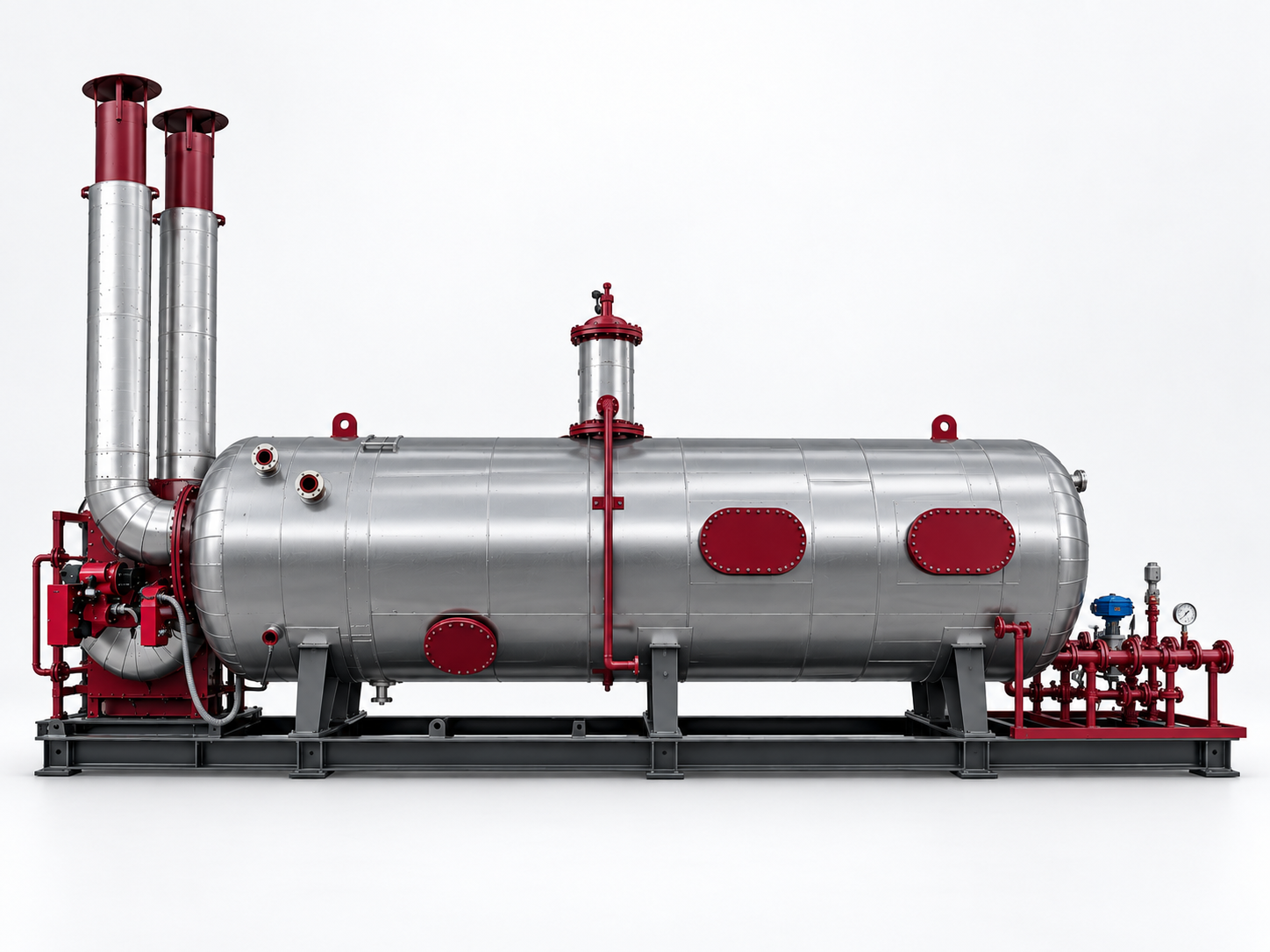
 Representative heater treater image; final burner and vessel details vary.
How Emulsion Heater Treater works
An emulsion heater treater raises fluid temperature to help reduce viscosity and support separation of oil and produced water. Heating, retention, interface control and internal flow distribution are developed together for the crude properties and target outlet quality. Burner type, fuel system and safety interlocks are specified for the site and project scope.
Heating and residence time for crude treatment
The heater treater combines controlled heat input with residence and separation stages to assist oil and water disengagement. Treatment duty depends on emulsion stability, inlet water cut, crude properties, target export quality and chemical program. Internals, heating method, level control and sludge or sand handling are selected for the fluid. Provide the inlet and outlet specifications and test data where available; separation performance cannot be fixed without the process basis.
Developed for the operating duty
Typical applications
- Crude oil dehydration and emulsion treatment
- Production handling with difficult oil and water separation
- Integrated early production packages
Inputs for engineering
- Inlet flow, water cut, viscosity and emulsion behaviour
- Inlet and target temperatures, heat duty and fuel availability
- Outlet water and oil quality targets and residence time
What the package can include
- Pressure vessel and internal treatment arrangement
- Burner package, flame safeguards and temperature control
- Level, interface, pressure protection, piping and insulation
Final sizes, material grades, pressure classes, makes, testing and documentation are specified in the approved technical offer. We coordinate applicable design, fabrication, inspection and quality records against the project requirements.
Is a dual fuel burner available?
Dual fuel operation can be specified subject to burner selection, available fuels and the approved control and safety design.