
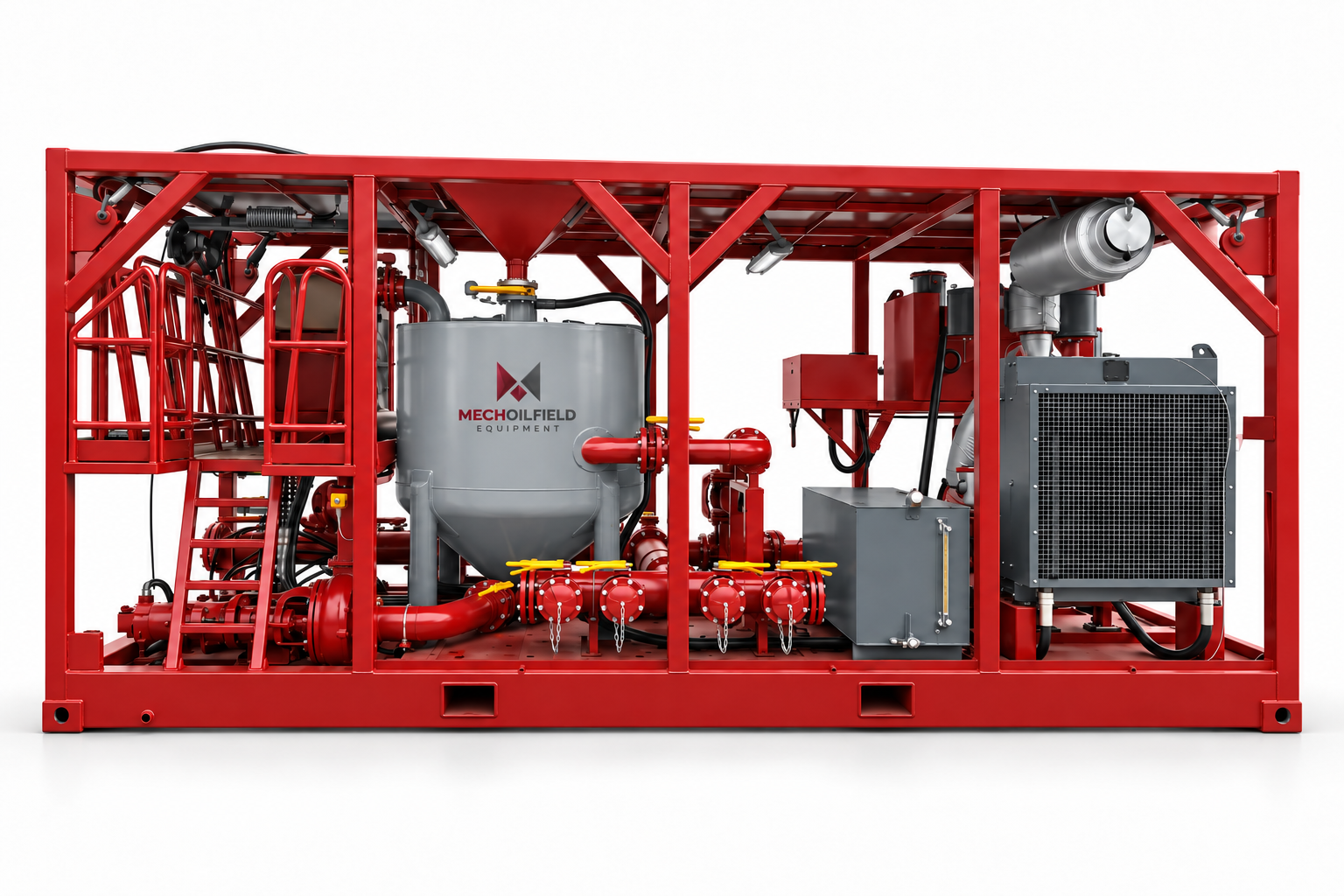
 Representative blending unit image; exact configuration requires a datasheet.
How Blending Unit works
A blending unit combines the specified liquid and solid feeds with circulation and measurement to reach a target blend. Hopper, mixing tub, centrifugal pumps and controls are arranged for the product handled and required throughput. Final equipment selection depends on the fluid rheology, additive feed and operating conditions.
Metered fluid preparation for field operations
A blending unit combines base fluid and additives to the specified recipe and delivery rate. Mixing intensity, dosing accuracy, tank geometry and pump arrangement depend on viscosity, solids content and how the fluid is fed to the next process stage. Confirm whether continuous blending, batch preparation or recirculation is required. Instrumentation, operator access and washdown provisions should be included in the package boundary when relevant.
Developed for the operating duty
Typical applications
- Well servicing fluid blending
- Cementing support and slurry preparation
- Packaged mixing and transfer systems
Inputs for engineering
- Target blend rate and density range
- Liquid and dry feed properties and quantity
- Utilities, control requirements and hazardous area
What the package can include
- Mixing and recirculation arrangement
- Pumps, hoppers, manifolds and discharge piping
- Density or flow measurement as specified
Final sizes, material grades, pressure classes, makes, testing and documentation are specified in the approved technical offer. We coordinate applicable design, fabrication, inspection and quality records against the project requirements.
What information is needed for a blending offer?
Share target rate, fluid recipe, density range, solids feed and operating arrangement so we can develop the equipment scope.