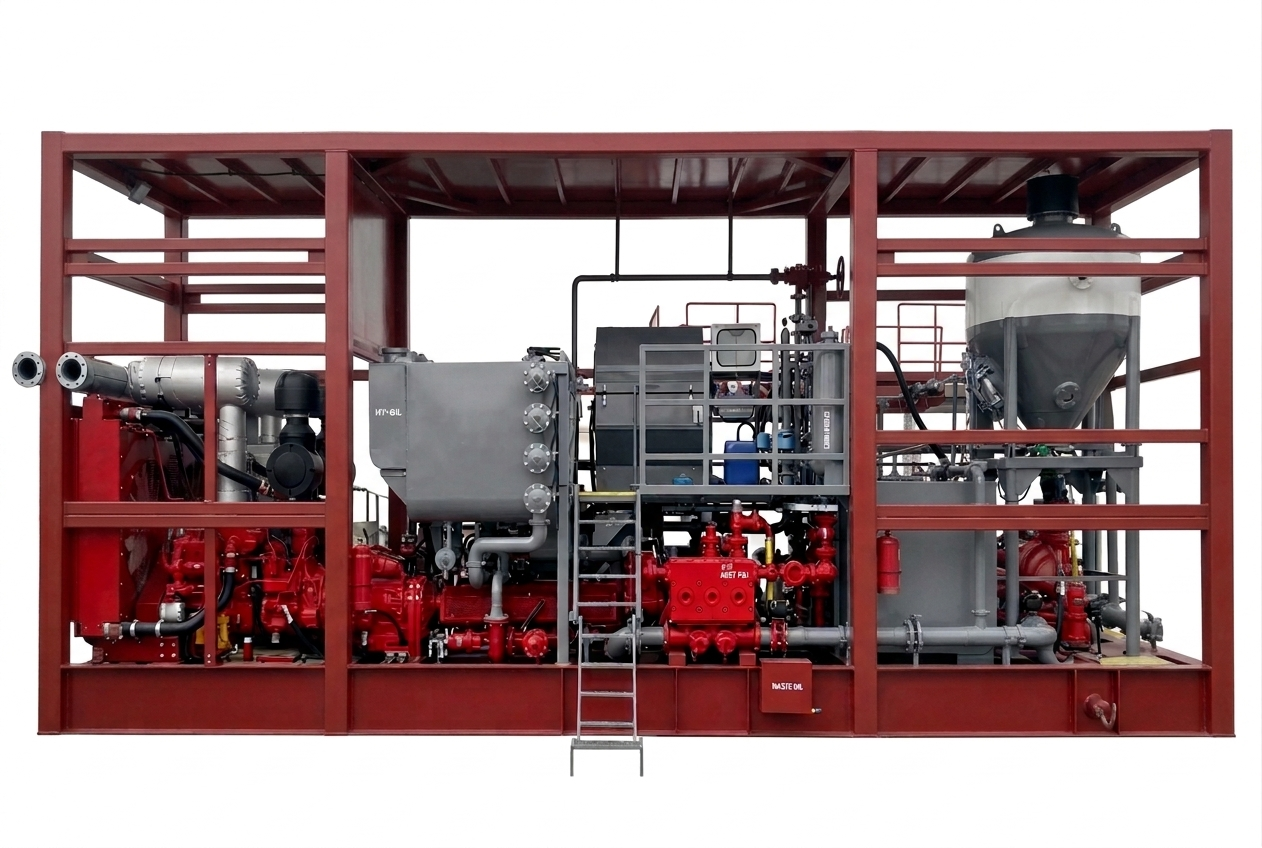
 Representative cementing image; two-pump layout requires project drawings.
How Dual Pump Cementing Unit works
A dual pump cementing unit combines two high pressure triplex pumps and their drive trains with fluid mixing and displacement systems. The arrangement can support the required combined rate or operational flexibility, depending on the control philosophy. Space, maintenance clearances, engine cooling, hydraulic routing and instrumentation are coordinated on the skid or mobile chassis.
Two pumping trains and shared services
A dual pump package can provide higher combined rate, staged operation or a defined standby arrangement, depending on the control philosophy. The two pumps must be matched with available engine power, suction supply, mixing capacity, discharge manifold and pressure protection. State whether simultaneous running or duty and standby operation is planned; this affects piping, instrumentation and overall capacity. The detailed offer should define each train and common auxiliaries clearly.
Developed for the operating duty
Typical applications
- High rate cementing operations
- Two train pumping flexibility
- Integrated oilfield service packages
Inputs for engineering
- Combined and per-pump rate/pressure requirements
- Engine and transmission preferences
- Mixing capacity, auxiliary power and hazardous area
What the package can include
- Two triplex pumps and matched powertrains
- Auxiliary mixing, centrifugal circulation and displacement equipment
- Operator control panel, engine monitoring, interlocks and FAT
Final sizes, material grades, pressure classes, makes, testing and documentation are specified in the approved technical offer. We coordinate applicable design, fabrication, inspection and quality records against the project requirements.
Can the two pumps use different plunger sizes?
This can be assessed for the requested pressure and rate envelope; the selected pump configuration is defined in the project offer.