
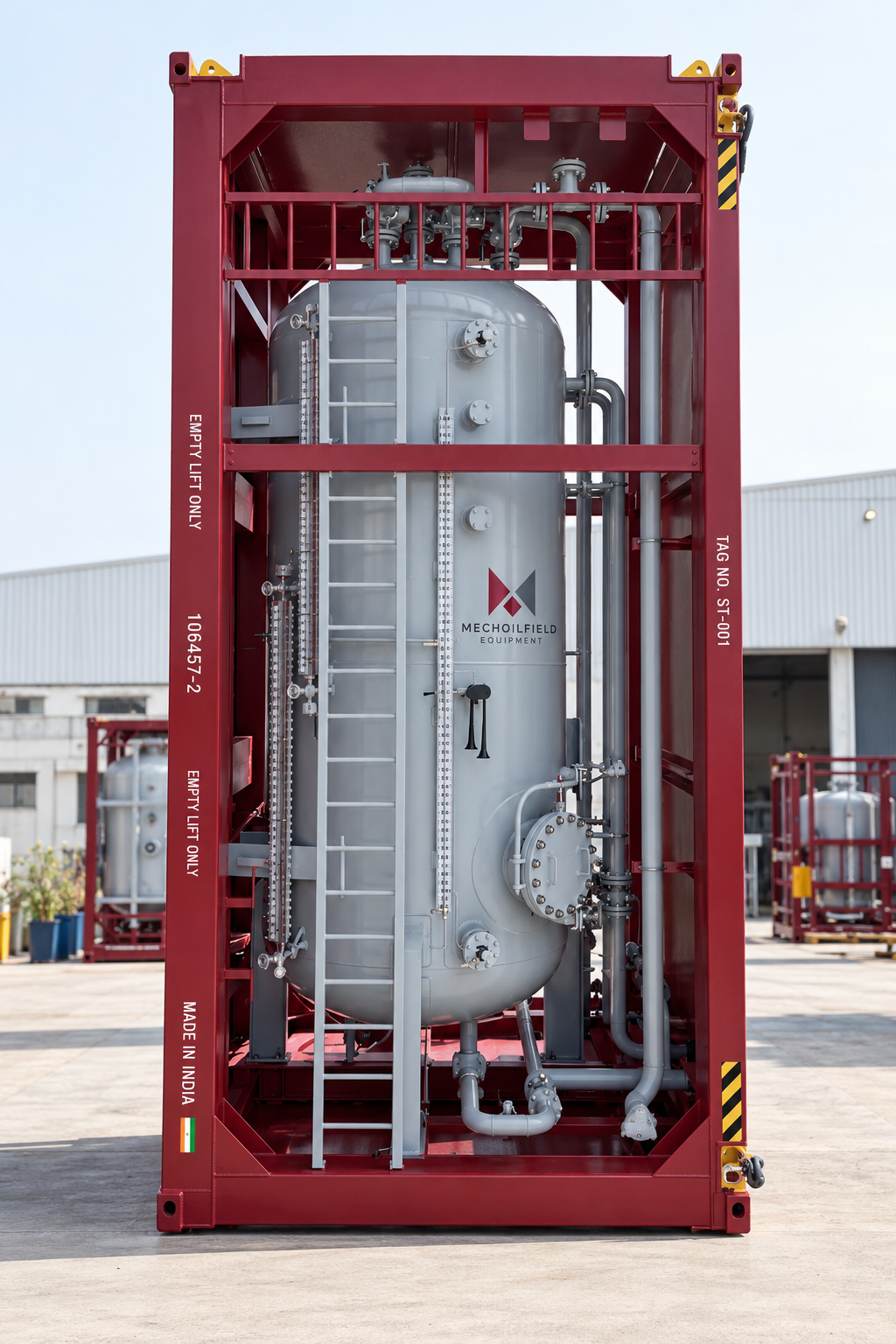
 Representative surge tank image; confirm final arrangement against drawings.
How Surge Tank works
A surge tank provides controlled liquid holding between upstream separation and downstream transfer. The tank layout may include compartments, level monitoring, vents, drains, sampling and transfer connections. Geometry, volume and protection are selected to suit the required flow, residence time, transport arrangement and site operating philosophy.
Liquid hold-up and transfer interfaces
A surge tank provides controlled liquid inventory between the test separator and downstream transfer or measurement equipment. Tank capacity depends on liquid rate, expected surges, pump cycling and available space. Specify whether the duty calls for a pressurized vessel or an atmospheric tank; these are different pressure boundaries. Level indication, high-level protection, vents, drains, sampling and pump suction arrangement should be agreed before fabrication.
Developed for the operating duty
Typical applications
- Well testing liquid storage and transfer
- Temporary production and measurement packages
- Single or divided compartment arrangements
Inputs for engineering
- Required working capacity and maximum liquid inflow
- Fluid density, temperature and hazardous-area requirements
- Venting, overflow, spill containment and transfer scheme
What the package can include
- Tank shell, supports and skid integration
- Manways, calibrated level indication and sampling connections
- Transfer pump interfaces, drains and earthing provisions
Final sizes, material grades, pressure classes, makes, testing and documentation are specified in the approved technical offer. We coordinate applicable design, fabrication, inspection and quality records against the project requirements.
Can the surge tank have two compartments?
A divided arrangement can be evaluated where the process requires separate liquid handling; the final layout depends on the approved P&ID.